
Wall Sealer: Is It Really Necessary Before Painting?
Share This Blog

Wall Sealer: Is It Really Necessary Before Painting?
You’ve chosen the colour, bought the paint and you’re ready to give your walls a fresh new look. Then someone tells you that you need to apply a wall sealer first.
Another product? Another step? Another expense?
Can’t you just paint straight onto the wall and call it a day?
Well, sometimes the most important part of a paint job is the part you barely notice once everything is finished.
Wall sealer helps prepare the surface underneath your paint, and skipping it when it’s needed can affect how well your finishing coat performs.
Here’s why this often-overlooked step deserves more attention, especially when you’re painting a new house or refreshing older walls in Malaysia.
What Exactly Does Wall Sealer Do?
Think of wall sealer as the foundation of your paint job.
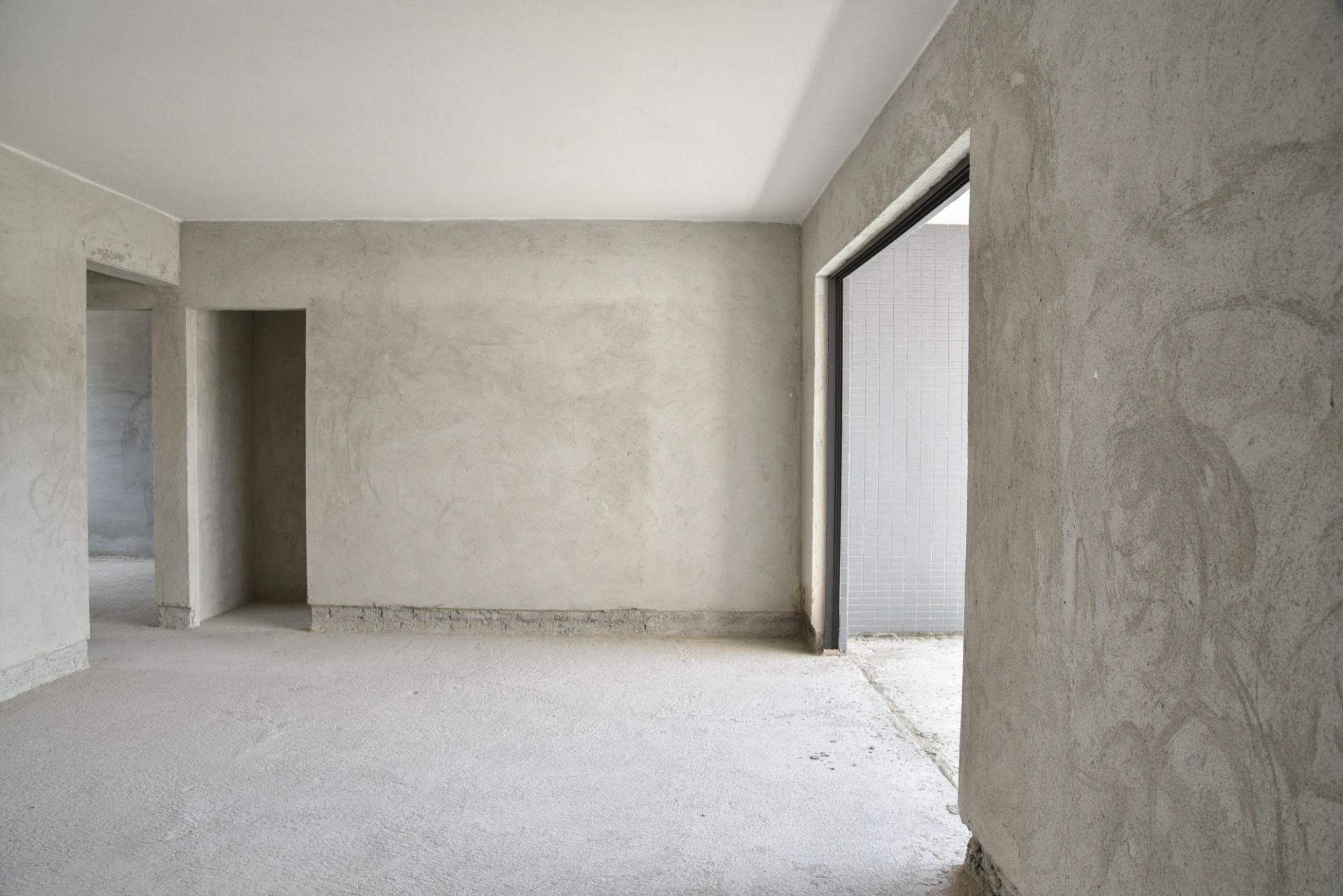
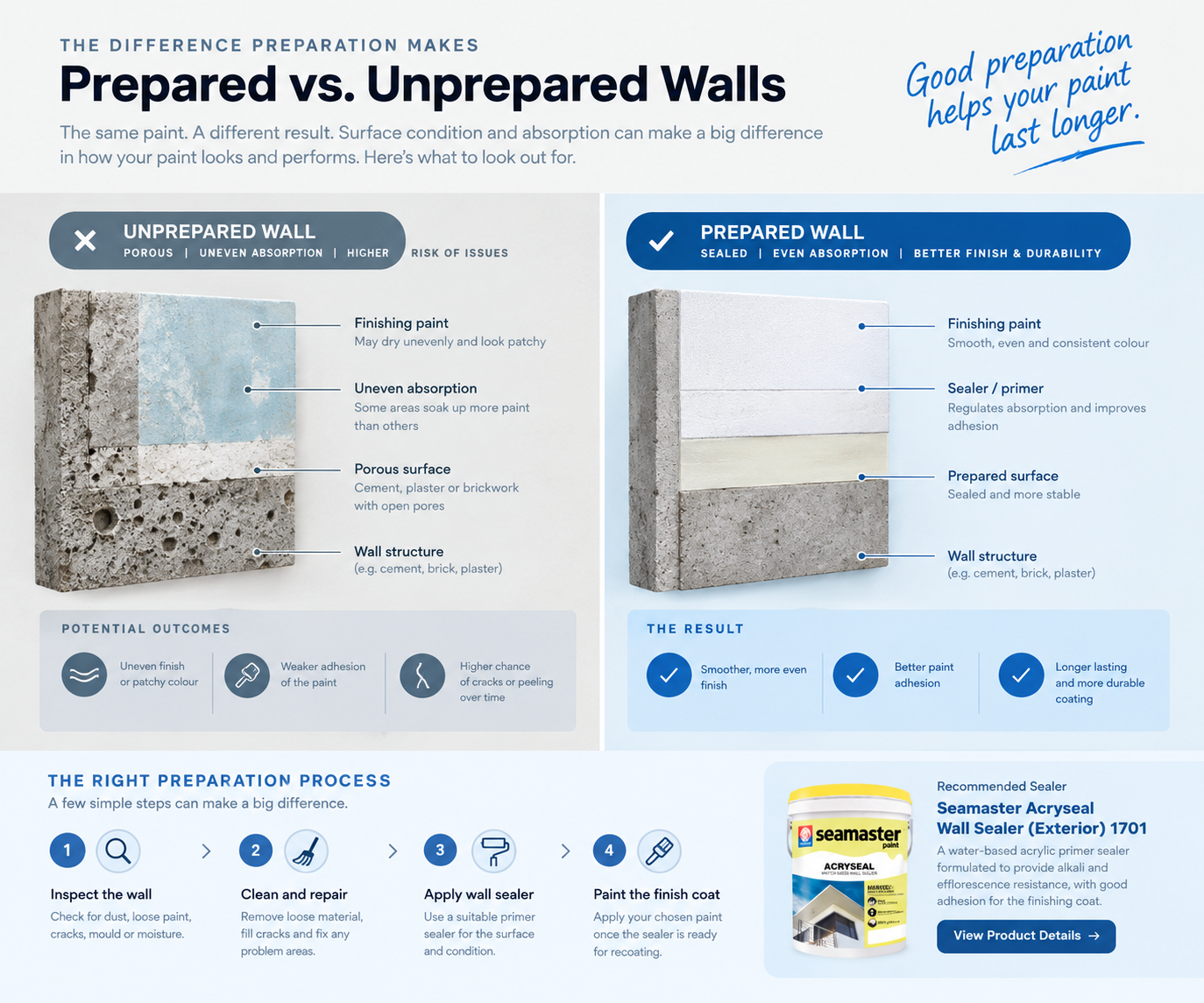
Surfaces such as plaster, cement and brickwork can be porous, meaning they absorb liquid at different rates. Apply paint directly to an unsuitable or highly absorbent surface, and the paint may not dry evenly or achieve the finish you expected.
A suitable primer sealer helps prepare the surface for the finishing coat. Depending on the product and substrate, it can help regulate absorption, improve adhesion and provide a more suitable base for subsequent painting.
It can also help address specific surface conditions, such as alkalinity, when the product is designed for that purpose.
This matters because cement-based surfaces can remain alkaline, particularly when new or not sufficiently cured. Applying an incompatible coating over a surface that hasn’t been properly prepared can contribute to paint problems later.
In other words, wall sealer isn’t just an extra layer. It’s part of getting the surface ready for the layers that follow.
What Happens If You Skip the Sealer?
Not every wall needs the same preparation, so skipping sealer isn’t automatically a mistake in every situation. However, when a surface requires a primer sealer, leaving it out can create problems.
1. Uneven paint absorption
Porous areas may absorb paint differently, making it harder to achieve a consistent finish.
2. Poor adhesion
If the surface isn’t suitable for direct painting, the finishing coat may not adhere as well as intended.
3. Alkalinity-related paint problems
Highly alkaline cement-based surfaces can affect incompatible coatings, potentially contributing to discolouration or deterioration.
4. A finish that doesn’t perform as expected
Even if the wall looks fine immediately after painting, an unsuitable base can affect the performance of the overall coating system.
Here’s the catch: adding more finishing paint doesn’t necessarily solve these issues. Sometimes, the problem starts before the first coat even goes on.
Why Sealer Matters in Malaysia
Our weather makes wall preparation particularly important.
Heat, humidity, heavy rain and moisture exposure can all influence how building surfaces behave. Exterior walls may also face wind-driven rain, while interior walls can be affected by condensation or moisture from plumbing and other sources.
For new homes, cement plaster and other masonry surfaces need appropriate curing and preparation before painting. Older homes may have different concerns, including deteriorated coatings, powdery surfaces or areas affected by moisture.
This is where choosing the right primer sealer matters.
A product intended for exterior masonry, for example, may offer properties suited to conditions that a basic interior primer isn’t designed to handle.
But remember: sealer is not a cure for every wall problem. Persistent leaks, rising damp, serious cracks and active water ingress need to be investigated and addressed at the source before repainting.
Otherwise, you’re asking the paint system to solve a problem it wasn’t designed to fix.
Meet Seamaster Acryseal Wall Sealer 1701
For homeowners and contractors preparing walls for a fresh coat of paint, Seamaster offers Acryseal Wall Sealer (Water Based Exterior) 1701, a water-based acrylic primer sealer designed for interior and exterior use.
According to Seamaster’s product information, Acryseal 1701 is formulated to provide resistance to alkalinity and efflorescence, while helping improve adhesion for the finishing coat.
It also lists several practical properties:
High penetrative ability: Designed to penetrate suitable surfaces as part of surface preparation.
Hairline crack sealing: Intended to help seal hairline cracks within the limits of the product’s application requirements.
Waterproofing properties: A stated product feature, subject to the manufacturer’s technical guidance and the conditions of use.
Anti-fungus and algae formulation: Useful to consider for surfaces exposed to conditions where fungal or algae growth can occur.
The product is water-based with a matt finish. Seamaster lists a theoretical coverage of approximately 11–13 square metres per litre, although actual coverage depends on the surface’s porosity, condition, application method and other site conditions.
For the best results, follow the current technical data sheet for surface preparation, application, drying and recoating requirements.

How to Use Wall Sealer the Right Way
Buying the right product is only half the job. The surface still needs to be prepared properly.
First, inspect the wall. Look for loose paint, dust, powdery areas, cracks, mould and signs of moisture.
Next, fix what needs fixing. Remove loose material and repair damaged areas appropriately. Address leaks or persistent dampness before applying a new coating system.
Make sure the surface is ready. New cement-based surfaces need sufficient curing, and the substrate must meet the product’s requirements before application.
Apply the suitable sealer. Follow the manufacturer’s instructions for dilution, application method, coverage and drying time.
Finish with the appropriate paint. Once the sealer is ready for recoating, apply a compatible finishing coat according to the product instructions.
Don’t rush the process just because the sealer looks dry on the surface. Follow the recommended recoating interval and application conditions.
So, Is Wall Sealer Worth It?
If your wall needs a primer sealer, absolutely. It’s a relatively unglamorous step that can make a meaningful difference to the performance of the complete paint system.
The trick is understanding what your surface needs and choosing a product designed for that purpose.
Seamaster Acryseal Wall Sealer 1701 offers a water-based option for suitable interior and exterior surfaces, with properties intended to help prepare the wall before the finishing coat goes on.
Because a beautiful paint job doesn’t start with the colour chart.
It starts with the surface you’re about to paint.
And sometimes, the layer you never see is the one worth getting right.

Aida - SMP Colour & Paint Specialist
Sharing practical house painting tips, smart techniques, and real-world industry insights.


