
Fire-Resistant Paint: Does It Actually Work?
Paint that helps protect a building from fire sounds almost too good to be true. After all, how much difference can a layer of paint really make when temperatures reach hundreds of degrees?
Quite a bit, actually. But there’s some clever science behind it.
Fire-resistant paint is not ordinary paint, and it doesn’t make a building fireproof. Certain specialist coatings are designed to help protect building materials when exposed to high temperatures. One type, known as an intumescent coating, reacts to heat by expanding into an insulating layer.
It’s a fascinating technology, and one that plays an important role in building fire protection.
So, how does it work, when is it useful, and what should you know before choosing one?
Let’s get into it.
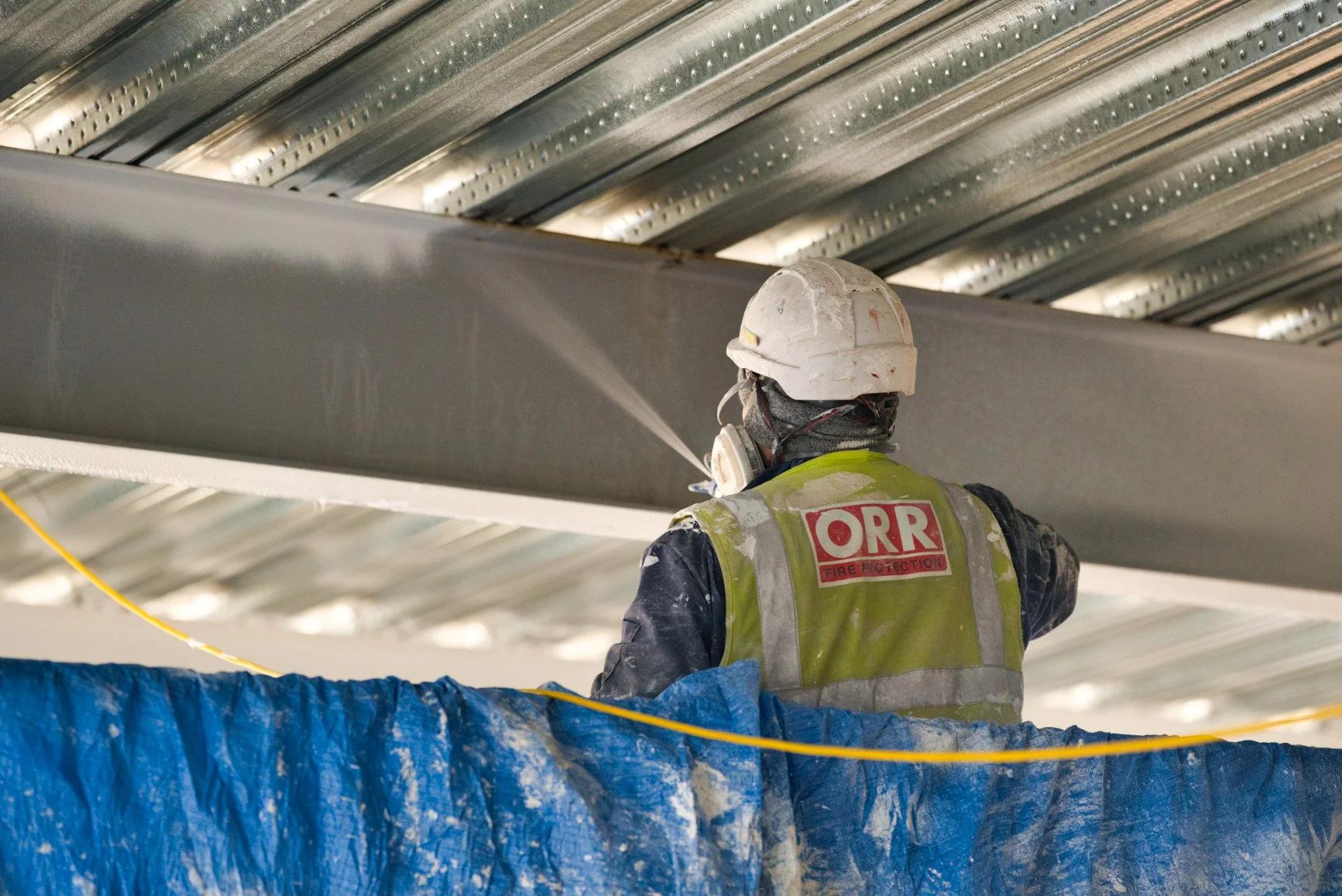
What Is Fire-Resistant Paint?
Fire-resistant paint is a broad term commonly used to describe coatings designed to help improve the fire performance of a surface or building component.
One important type is intumescent fire-retardant coating.
Unlike ordinary decorative paint, an intumescent coating is specially formulated to react when exposed to sufficiently high temperatures. It expands and forms a thicker, insulating layer over the protected surface.
Why does that matter?
Because some building materials, particularly structural steel, can lose strength as their temperature rises.
Steel doesn’t need to melt before it becomes a concern. Under intense heat, its ability to carry loads can decrease, potentially affecting the stability of the structure.
An intumescent coating helps slow the rate at which heat reaches the underlying material. Depending on the tested system and its application, this can help maintain the material’s structural capacity for longer during a fire.
In other words, the coating isn’t there to make a wall look nice. It’s there to perform a very different job when things get dangerously hot.
How Does Intumescent Paint Actually Work?
Here’s where things get interesting.
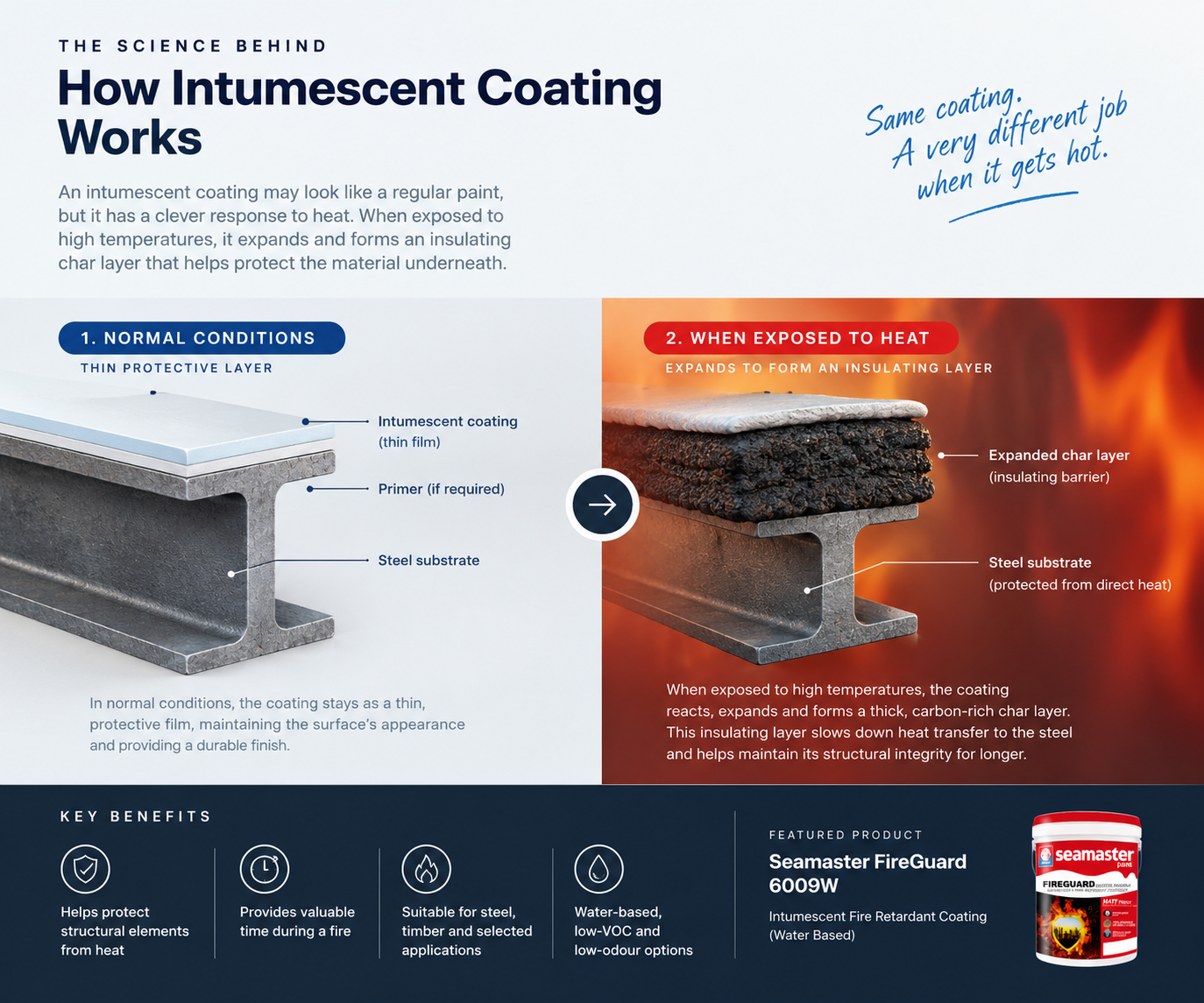
Under normal conditions, an intumescent coating looks like a regular painted finish. But when exposed to sufficient heat, chemical reactions within the coating cause it to expand and form a foamed, carbon-rich layer called char.
This layer can become many times thicker than the original coating, creating an insulating barrier between the fire and the material underneath.
Seamaster’s FireGuard Intumescent Fire Retardant Coating 6009W states that its coating can expand to up to 100 times its original thickness when exposed to fire.
That’s a significant transformation for a coating that starts out as a relatively thin film.
The expanded char helps slow heat transfer, giving the protected material more time before it reaches critical temperatures.
However, expansion alone doesn’t determine how long a structure can withstand fire. Actual performance depends on factors such as the substrate, applied coating thickness, installation quality and the relevant fire-test results.
So, does it work? Yes, properly specified and tested intumescent systems can provide meaningful fire protection. The important part is choosing and applying the right system for the job.
Where Is Fire-Resistant Paint Used?
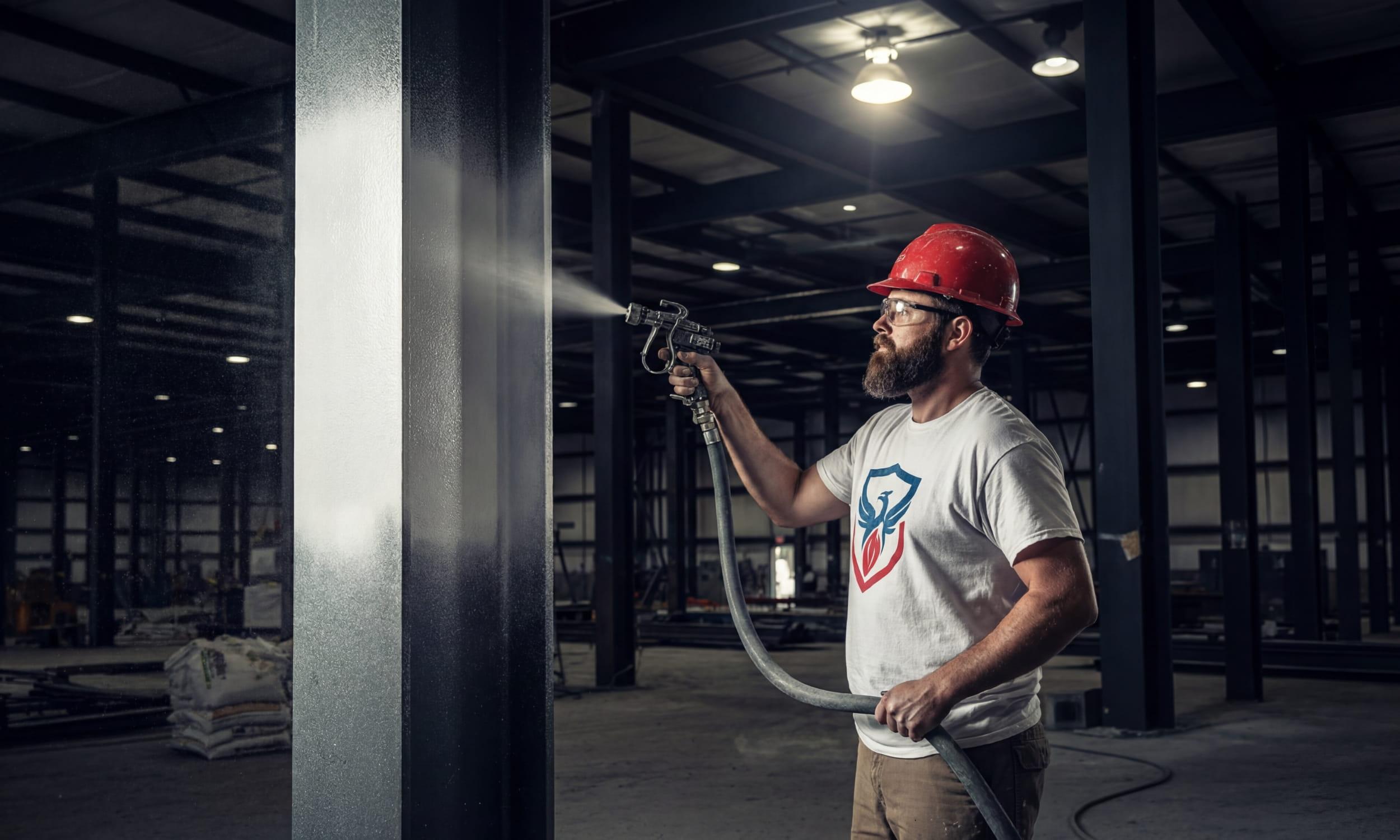
Intumescent coatings are particularly relevant to buildings that use structural steel, although some specialist products are also designed for certain timber applications.
You may find them specified for projects such as:
Commercial buildings: Offices, shopping centres and other developments with structural steel elements.
Industrial facilities: Factories, plants and similar buildings where structural fire protection is part of the design.
Public buildings: Selected structural elements in facilities such as sports venues and transport buildings.
Timber applications: Certain wooden structural components or decorative panels, provided the coating is suitable for that specific use.
The exact application matters. A coating suitable for one substrate or environment isn’t automatically suitable for another.
Fire protection requirements should be established by the project’s qualified professionals, based on the building design and applicable regulations.
Meet Seamaster FireGuard 6009W
For projects where structural protection and appearance both matter, Seamaster offers FireGuard Intumescent Fire Retardant Coating (Water Based) 6009W.
According to Seamaster’s product information, FireGuard 6009W features a water-based formulation, a matt finish, low-VOC and low-odour properties, and application methods that include brush and mortar gun spray.
The product information also describes good film-thickness build-up and properties intended to minimise sagging and cracking when correctly applied.
These features can be useful when evaluating a coating for a suitable project, particularly where application requirements and the finished appearance need to be considered together.
But here’s the part worth remembering: choosing a specialist coating involves more than comparing product features.
Before specifying FireGuard 6009W, check its latest technical data sheet and relevant fire-test documentation to confirm that it meets the requirements for your intended application. The required dry-film thickness and protection period must be established for the actual system being used.
Fire protection isn’t the place to guess and hope for the best.

Does Fire-Resistant Paint Make a Building Fireproof?
No, and this distinction is important.
Intumescent coatings are designed to help protect suitable materials from the effects of heat. They do not prevent every fire, stop flames from spreading in all circumstances or make a building completely fireproof.
They are one part of a wider fire safety strategy that may include smoke detection, alarms, sprinklers, fire-rated doors, compartmentation and safe evacuation routes.
The coating must also be appropriate for the material, installed according to the specified requirements and inspected as necessary.
Think of it as one important layer of protection, not a substitute for the rest.
What Should You Check Before Choosing a Fire-Retardant Coating?
If you’re a developer, contractor, architect or building owner, start with these three questions.
1. Is the coating suitable for the material?
Confirm whether the product is intended for structural steel, timber or another substrate, and whether that application is covered by its technical documentation.
2. Has its fire performance been tested?
Ask for relevant test reports and certification documents. Check the standard, scope, validity and conditions of use rather than relying on a product description alone.
3. Will it be applied correctly?
Specified coating thickness, surface preparation, application conditions and quality control all affect performance. Use qualified professionals and follow the manufacturer’s requirements.
These checks may not be the most exciting part of a construction project, but they help ensure the coating is selected for the performance the building actually needs.
So, Is Fire-Resistant Paint Worth Considering?
If a building project requires additional protection for suitable structural elements, an appropriately tested intumescent coating can be an important part of the solution.
Seamaster FireGuard 6009W offers a water-based intumescent coating option for suitable applications, combining a matt finish with technology designed to form an insulating layer when exposed to fire.
The key is to assess the project’s requirements first, then confirm that the product and specified application meet them.
Because good fire protection isn’t about buying the paint with the boldest claim. It’s about understanding what the coating does, where it can be used and how it needs to perform.
Fire-resistant paint might look like an ordinary coat of paint. Under the right conditions, however, the science behind it is anything but ordinary.

Aida - SMP Colour & Paint Specialist
Sharing practical house painting tips, smart techniques, and real-world industry insights.
Table of Contents
- Fire-Resistant Paint: Does It Actually Work?
- What Is Fire-Resistant Paint?
- How Does Intumescent Paint Actually Work?
- Where Is Fire-Resistant Paint Used?
- Meet Seamaster FireGuard 6009W
- Does Fire-Resistant Paint Make a Building Fireproof?
- What Should You Check Before Choosing a Fire-Retardant Coating?
- So, Is Fire-Resistant Paint Worth Considering?


