
To Dilute or Not to Dilute? How to Dilute Paint the Right Way
Share This Blog
To Dilute or Not to Dilute? How to Dilute Paint the Right Way
“Just add a little water.”
It is probably one of the most common pieces of advice you will hear when someone is about to start painting. Some people swear by it, others prefer using paint straight from the tin, and then there are those who add water simply because they want their paint to stretch a little further.
But which approach is actually correct?
Knowing how to dilute paint is not just about achieving a consistency that feels comfortable to work with. It can also influence coverage, application and the quality of the finished surface.
Before you reach for that jug of water, there are a few things worth understanding.
1. Understand Why Paint Dilution Matters
Paint is more than a mixture of colour and liquid. It contains carefully balanced ingredients, including pigments, binders, liquids and additives, each serving a specific purpose.
Pigments provide colour and opacity. Binders help form the coating that adheres to the surface. Other ingredients contribute to application, drying and performance.
Adding water changes the concentration of these ingredients in every litre of paint applied.
When dilution is recommended by the manufacturer, it can help adjust the paint’s consistency for a particular application method. However, excessive dilution can result in a thinner coating, reduced hiding power and an inconsistent finish.
In other words, paint that spreads more easily is not necessarily paint that performs better.
2. Know When Adding Water to Paint Is Appropriate
Your front door is one of the first things people notice about your home. Why not give it a little personality?
A deep navy blue can create an elegant entrance, while forest green offers a sophisticated connection to nature. If you prefer something more timeless, glossy black or warm white can look equally impressive.
Using high gloss paint on a suitable wooden or metal front door can create a striking contrast against surrounding matt exterior walls.
For Malaysian homes, where covered porches and entrance areas are common, a thoughtfully chosen door colour can instantly refresh the appearance of the property without requiring a complete exterior makeover.
Sometimes, a single door is all you need to make a statement.
3. How to Dilute Paint Using the Correct Ratio
Here is where many DIY painters get a little too creative.
A splash of water becomes another splash, followed by a quick stir and a hopeful guess. Unfortunately, guessing is not a particularly reliable way to prepare paint.
If the manufacturer recommends dilution, measure the amount carefully.
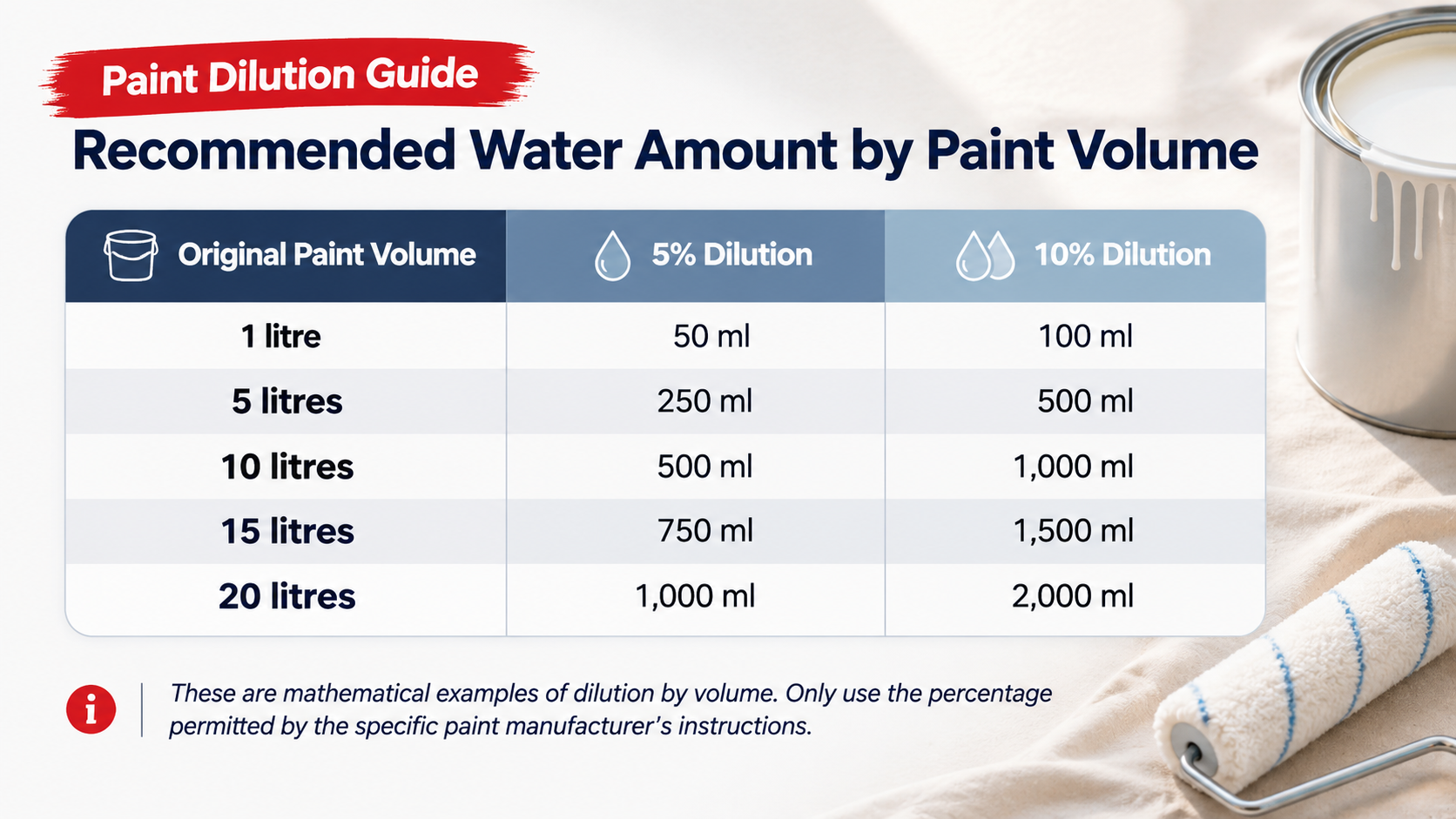
For example, if a water-based paint allows 5% dilution by volume, the calculation would be:
1 litre of paint: 50 ml of water
5 litres of paint: 250 ml of water
10 litres of paint: 500 ml of water
These figures are examples of a 5% dilution ratio, not a universal recommendation for every paint product.
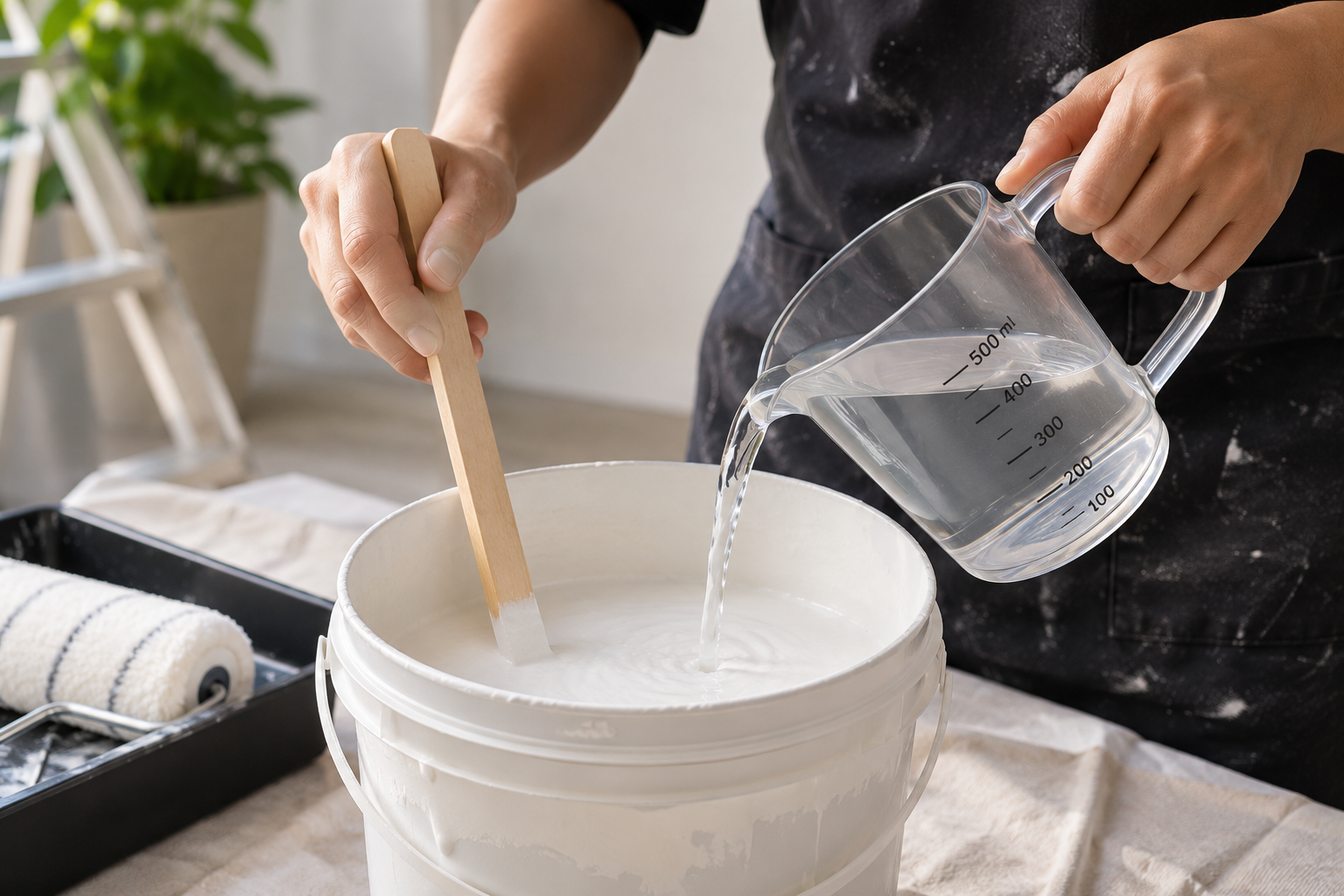
To prepare the mixture, stir the original paint thoroughly, measure the permitted amount of water and add it gradually while mixing. Test the consistency on a small prepared surface before continuing.
For larger projects, record the ratio you use. Maintaining a consistent mixture across batches can help reduce differences in application and appearance.
4. Recognise the Signs of Over-Diluted Paint
Adding more water might make paint feel easier to spread, but the problems can become apparent once it reaches the wall.
Here are some signs that excessive dilution could be affecting your paint job:
Poor coverage: The original wall colour remains visible through the new coating.
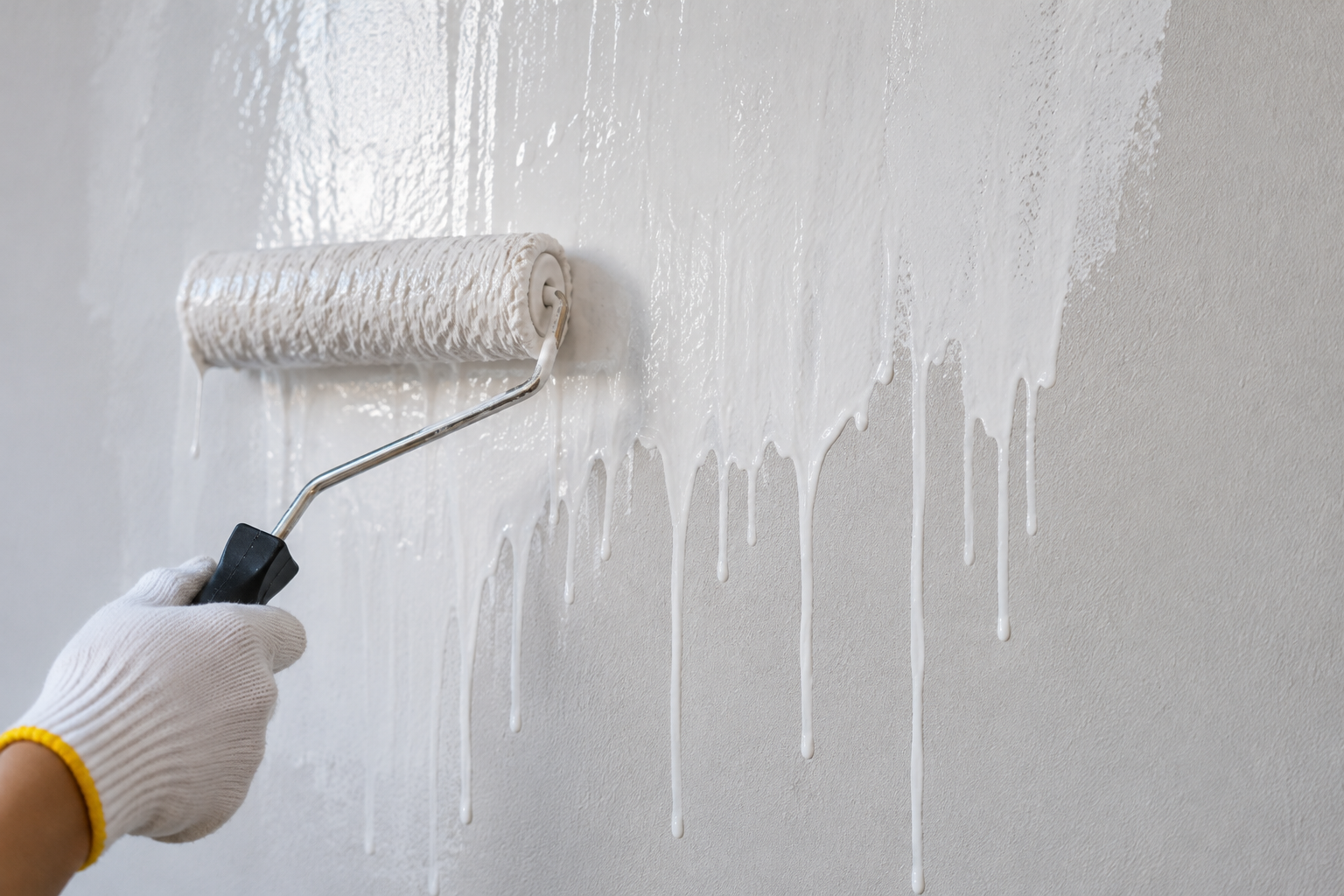
Excessive dripping: The paint runs down vertical surfaces instead of staying evenly distributed.
Uneven appearance: Some areas look more transparent or patchy than others.
Insufficient film thickness: The applied coating may not achieve its intended thickness.
These symptoms can also result from unsuitable tools, poor preparation or incorrect application techniques, so dilution is not always the sole cause.
Trying to save money by stretching a tin of paint may ultimately require additional coats and more time spent correcting the finish.
That extra splash of water might not be such a bargain after all.
5. Adjust Your Painting Technique Before Adjusting the Paint
Thick paint does not automatically mean something is wrong with it.
Sometimes, the difficulty lies in the painting tools, the surface condition or the surrounding environment rather than the paint itself.
A suitable roller, for instance, can make applying wall paint considerably easier. Thoroughly stirring the paint before use may also improve its consistency, particularly if the product has been sitting in storage.
Malaysia’s weather introduces another consideration. High humidity can slow drying, while hot surfaces and strong airflow can cause paint to dry too quickly during application.
Adding extra water is not a reliable solution to these conditions.
Instead, work within the manufacturer’s recommended application conditions, select suitable tools and allow sufficient time between coats.
If the paint still appears unusually thick, lumpy or separated after proper stirring, check its storage condition and seek advice before using it.
Three Common Paint Dilution Myths
“Adding more water means I can paint a larger area.”
You might spread the mixture across a larger area, but that does not mean you will achieve the required coverage or coating thickness.
“All water-based paints need water before application.”
Not necessarily. Some are ready to use, while others permit limited dilution under specific conditions.
“A thinner coat will always dry faster.”
Drying depends on several factors, including formulation, coating thickness, temperature, humidity and ventilation. Adding water does not guarantee faster drying.
The Right Consistency Makes All the Difference
Learning how to dilute paint correctly is less about finding a clever shortcut and more about understanding the product you are working with.
Before starting your next painting project, check the recommended dilution ratio, choose suitable application tools and follow the instructions provided for your specific paint.
Explore Seamaster Paint’s product range and refer to the respective technical data sheets for guidance tailored to your chosen coating.
Sometimes, the smartest painting trick is knowing when not to change a formula that has already been carefully developed for you.
Seamaster Paint. Your space, your colours.

Aida - SMP Colour & Paint Specialist
Sharing practical house painting tips, smart techniques, and real-world industry insights.
Table of Contents
- To Dilute or Not to Dilute? How to Dilute Paint the Right Way
- 1. Understand Why Paint Dilution Matters
- 2. Know When Adding Water to Paint Is Appropriate
- 3. How to Dilute Paint Using the Correct Ratio
- 4. Recognise the Signs of Over-Diluted Paint
- 5. Adjust Your Painting Technique Before Adjusting the Paint
- Three Common Paint Dilution Myths
- 5. Create a Beautiful Contrast Between Matt and Gloss
- The Right Consistency Makes All the Difference


