
Why Does Fresh Paint Sometimes Smell So Strong? What That Smell Actually Means
Share This Blog
Why Does Fresh Paint Sometimes Smell So Strong? What That Smell Actually Means
You know the smell.
You paint a room, step back to admire your work, and suddenly the whole place smells like… paint.
Sometimes it’s barely noticeable. Other times, you can smell it the moment you walk through the door.
So why does paint smell so much after you’ve finished painting?
And does a stronger smell mean the paint is better, worse, or simply still drying?
The answer is a little more interesting than you might think.
Why Does Paint Smell in the First Place?
The familiar new paint smell comes from substances released into the air as the paint dries.
Paint contains a mixture of ingredients that help it apply properly, form a film and achieve the desired finish. Some of these ingredients can evaporate into the surrounding air during and after application.
This process is known as off-gassing.
That’s why a freshly painted room can smell noticeably different from one that was painted days or weeks ago.
As the coating dries and cures, the smell generally becomes less noticeable.
So yes, that unmistakable “freshly painted” smell is basically a sign that there’s a lot going on between the wall and the air around it.
Why Does Some Paint Smell Stronger Than Others?
Not every paint has the same formulation.
Different types of paint can contain different ingredients, which means they can have different odours during application and drying.
The strength of the smell can also depend on how much paint was applied, the size of the room and how well the space is ventilated.
A small bedroom with the windows closed can feel much more intense than a large, well-ventilated living room, even if similar paint has been used.
Temperature and humidity can also influence how quickly a coating dries.
In Malaysia, where humidity can be high, the drying process may not always feel the same as it does in a cooler or drier environment.
How Long Does Paint Smell Last?
There isn’t one exact answer.
The duration of paint smell depends on several factors, including:
- The type and formulation of paint
- How much paint was applied
- The size of the room
- Air circulation and ventilation
- Temperature and humidity
- The number of coats applied
In a well-ventilated room, the smell may become much less noticeable relatively quickly.
In a closed room with limited airflow, it can linger for longer.
If you’re planning to repaint a bedroom, living area or another frequently used space, it’s worth thinking about ventilation before you start, not after you’ve finished.
Does Strong Paint Smell Mean Something Is Wrong?
Not necessarily.
A noticeable odour doesn’t automatically mean the paint is defective or that something has gone wrong.
However, strong or persistent paint fumes are a good reason to improve ventilation and follow the manufacturer’s instructions for application and use.
If you’re painting indoors, keep air moving where practical and follow the product label’s guidance.
And if you’re painting a room that will be occupied soon, give the coating adequate time to dry and cure according to the manufacturer’s recommendations.
The goal isn’t simply to make the smell disappear.
It’s to allow the paint to properly dry and the room to become comfortable to use again.
Does Ventilation Really Make a Difference?
Yes.
Air movement can help disperse odours and support the drying process.
Opening windows and doors where appropriate can improve airflow. Fans can also help move air through the space, provided they’re used safely and in a way that doesn’t simply blow dust onto your freshly painted wall.
If you’re painting multiple rooms, don’t underestimate the difference that airflow can make.
A room with no ventilation can trap odours.
A room with good airflow gives them somewhere to go.
It’s a surprisingly simple part of the painting process that is easy to overlook.
What About Low-Odour Paint?
If you’re particularly sensitive to paint odours or you’re painting an occupied home, low-odour options may be worth considering.
But remember that low odour doesn’t mean no ingredients are being released at all.
Always check the product information and follow the manufacturer’s instructions for application, ventilation and room use.
When choosing paint, it’s useful to look beyond colour and finish.
Consider where the paint will be used, how the space is ventilated and how quickly you need the room to be ready for normal use.
Seamaster offers paint solutions for different applications, so choosing a suitable product for your particular space is an important part of planning the job.
How to Get Rid of Paint Smell Faster
If you’ve just finished painting and the smell is hanging around, start with the basics.
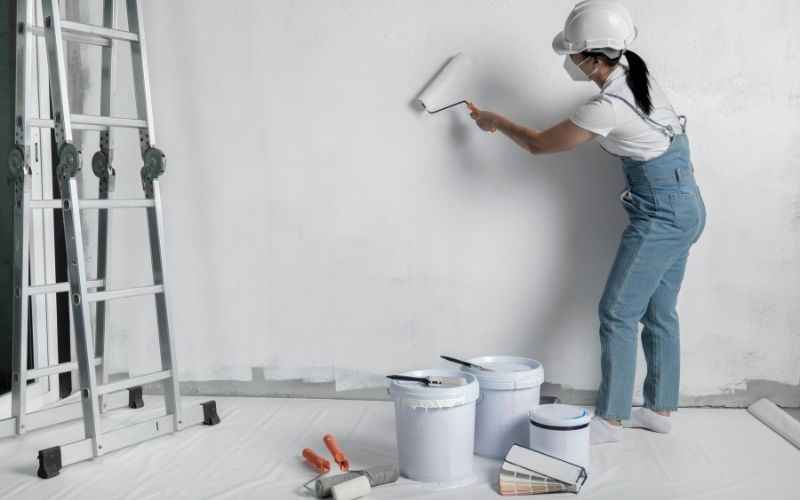
Improve ventilation. Open windows and doors where practical to encourage fresh air to move through the room.
Keep air circulating. Fans can help move air, provided they’re used safely.
Don’t rush the room back into use. Follow the paint manufacturer’s recommended drying and curing times.
Avoid simply masking the smell. Air fresheners may cover the odour temporarily, but they don’t replace proper ventilation.
Plan ahead. If possible, paint earlier in the day and allow plenty of time for the room to air out before it’s needed.
Sometimes the best solution is also the least exciting one:
Give it time.
Is the New Paint Smell a Good Thing?
It’s tempting to think of the smell as part of the experience.
Fresh walls. Fresh colour. Fresh paint smell.
But the smell itself isn’t what makes a paint job successful.
What matters more is the coating’s suitability for the surface and environment, proper preparation, correct application and enough time to dry and cure.
So don’t choose a paint simply because it smells less or more.
Look at the bigger picture.
A Fresh Coat Should Feel Fresh, Too
There’s something satisfying about walking into a newly painted room.
The colour is cleaner. The walls look brighter. The whole space feels different.
The smell, however, doesn’t need to be part of the long-term experience.
If you’ve ever wondered why paint smells, the simple answer is that components of the coating can be released into the air as it dries and cures. How noticeable that smell is depends on the paint, the room and the conditions around it.
Good ventilation, following the manufacturer’s instructions and choosing a paint suitable for the space can all help make the transition from “just painted” to “ready to enjoy” a little smoother.
Because the best kind of fresh paint smell?
The one you barely notice anymore.

Aida - SMP Colour & Paint Specialist
Sharing practical house painting tips, smart techniques, and real-world industry insights.
Table of Contents
- Why Does Fresh Paint Sometimes Smell So Strong? What That Smell Actually Means
- Why Does Paint Smell in the First Place?
- Why Does Some Paint Smell Stronger Than Others?
- How Long Does Paint Smell Last?
- Does Strong Paint Smell Mean Something Is Wrong?
- Does Ventilation Really Make a Difference?
- What About Low-Odour Paint?
- How to Get Rid of Paint Smell Faster
- Is the New Paint Smell a Good Thing?
- A Fresh Coat Should Feel Fresh, Too


